Are you TICA registered?
Not yet, and there's a wrinkle worth explaining. We are actively working toward TICA cattery registration and membership, with AFF licensing as our next goal. But at TICA's 2025 annual meeting the board voted to terminate experimental status for the Bambino, Dwelf and Elf outright, effective immediately, because those breeds don't meet TICA's registration rule for experimental breeds. Bambinos had held experimental status since 2005 and Dwelfs sat in the same Experimental New Breed category. Both are Sphynx crossed with the Munchkin's short-legged gene (the Dwelf adds American Curl ears), so the pedigree isn't purely Sphynx — that's exactly why the registry closed the door. It says nothing about health or quality: these are the same warm, wrinkled, ridiculous cats they were the week before. They are simply rarer now, still registrable through the Rare and Exotic Feline Registry, and a standard-eared Sphynx from our program remains fully TICA-eligible.
How much is a kitten?
Kittens in the current litter are $2,500–$3,200 depending on the kitten. We share deposit details and exactly what's included by private message — it lets us explain properly and answer follow-up questions, instead of in a comment thread.
What testing has been done?
Ask us directly and we'll tell you exactly what's been done, what's scheduled, and what hasn't happened yet. Every kitten sees a vet before placement and goes home with written records.
Is it spelled Sphynx or Sphinx?
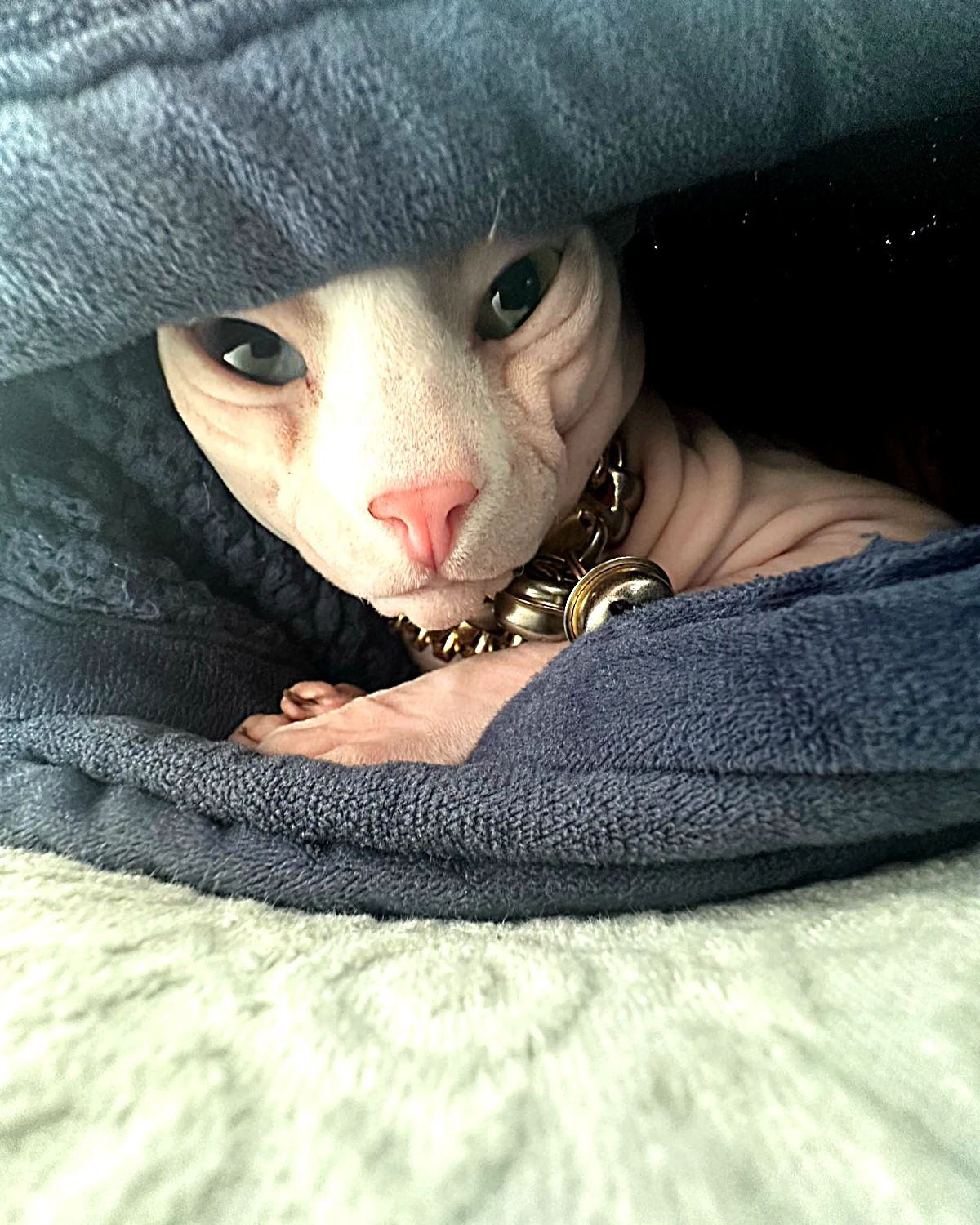
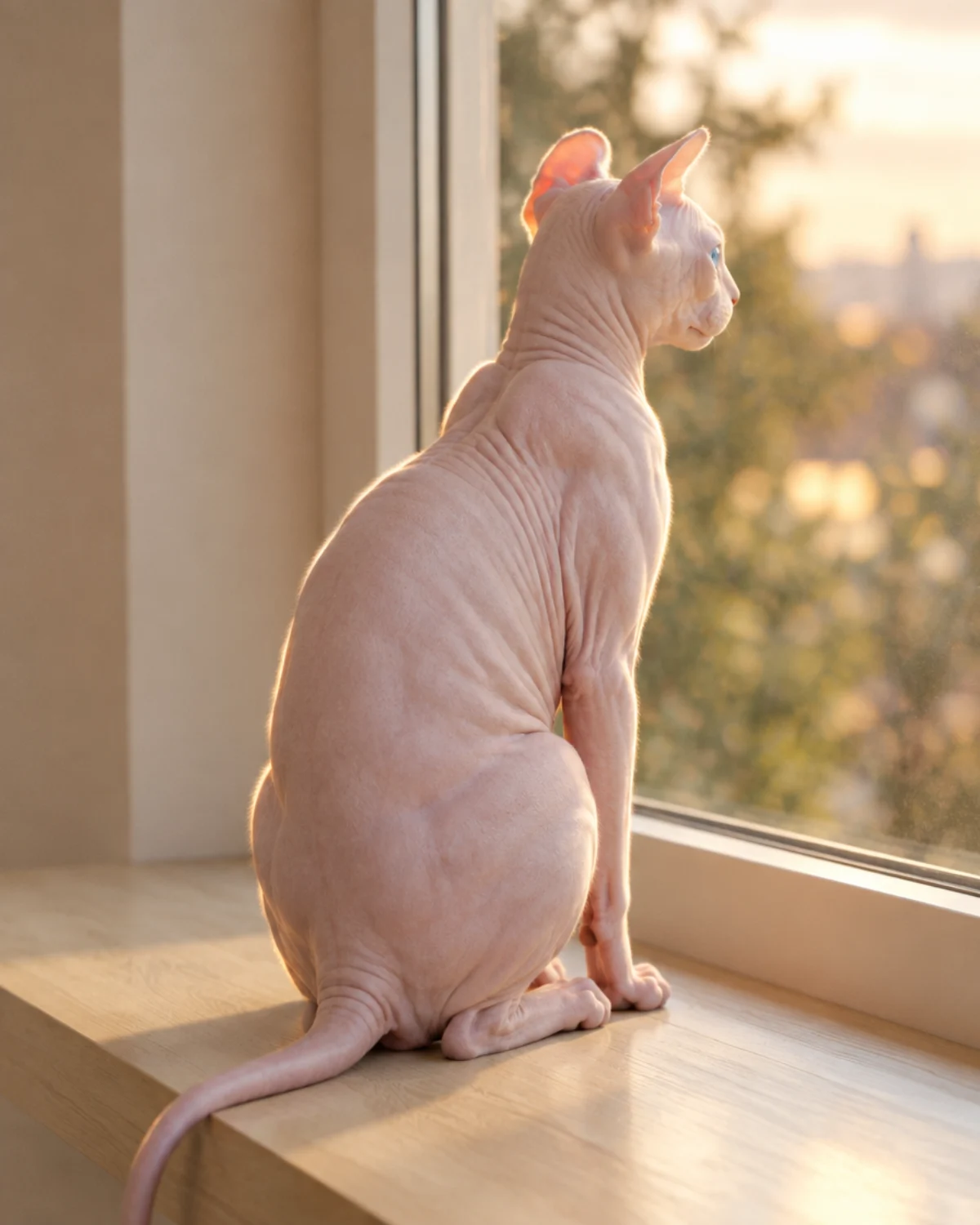
The cat is a Sphynx, with a y. The Sphinx with an i is the stone one in Egypt. The breed took the name because the bare, upright, watchful look reminded people of the statue — but it's a Canadian breed, first bred from a hairless kitten born in Toronto in 1966, with no Egyptian origin at all. Every registry spells it Sphynx, so that's the spelling we use everywhere. If you searched “sphinx kittens” and landed here, you're in the right place.
How is a Sphynx different from a Devon Rex?
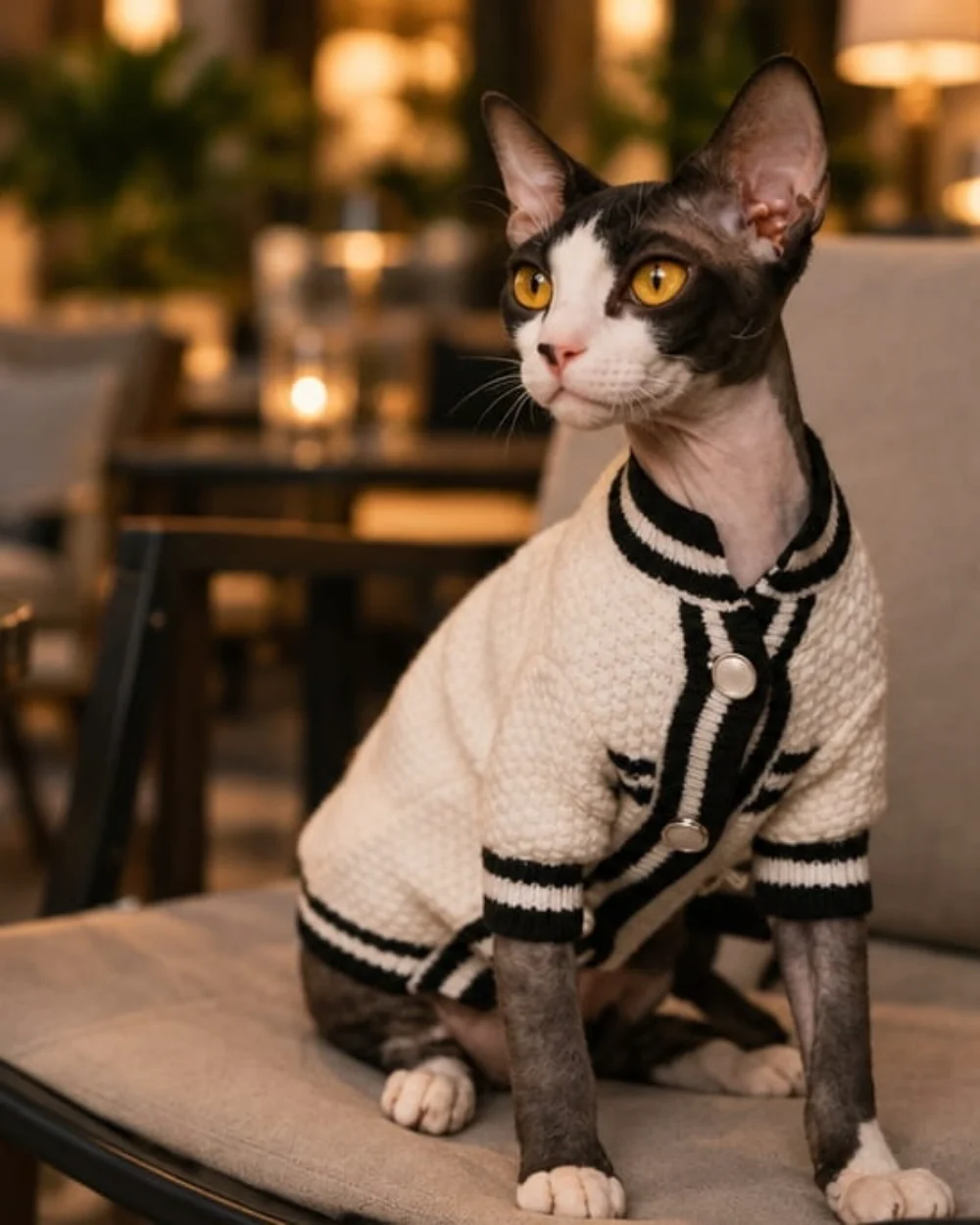
Genetically, a lot — different mutations, different countries, different decades. A Devon Rex (Cornwall, England, 1960s) isn’t actually hairless: it has a fine, soft, curly coat, so it sheds less and needs less bathing than a Sphynx, which is truly bare with just a light peach-fuzz down. Both share that same oversized-ear, big-eyed, wrinkled look people call “alien” or “pixie,” and both run warm and lean hard into laps, which is why people cross-shop them. Want zero shedding and don’t mind regular bathing? That’s a Sphynx. Want something closer to fur that still sheds very little? That’s a Devon Rex — ask us and we’ll happily point you to reputable Devon Rex breeders if that’s the better fit for your home.
Are Sphynx really hypoallergenic?
No. That's a myth we'd rather correct up front. The allergen is in saliva and skin, not fur. Many allergy sufferers do better with a Sphynx, but no cat is truly hypoallergenic. Spend time with one first.
How do kittens travel to me?
We're in Utah County. Local pickup is our favorite. You get to meet everyone. We also arrange ground transport or a flight nanny, at the adopter's cost.
When can a kitten come home?
When they're genuinely ready: eating well, litter-trained, socially confident, and vet-cleared. Never earlier because someone's excited, including us.
Why the screening questions?
Because we're the middleman in something great, not a store. Knowing about your home, other pets, kids, and vaccination plans helps us match the right kitten to the right family, and it's how we keep them from ending up rehomed later.
Do you offer breeding rights?
Kittens are placed as pets on a spay/neuter agreement. If you're a breeder and want to talk, message us. We're always glad to connect with the community.